Taking a break from an activity that you love is never easy, but there are many benefits to treating sports injuries early. If left untreated, sports injuries can keep an athlete off the field for longer and prevent them from ever returning. The best way to treat sports injuries is to listen to your body and seek medical attention immediately. This article will discuss common sports injuries, treatments and the psychological impact on an athlete. It will also highlight the important role that a sports psychologist plays in the recovery process.
What are 5 Common sport injuries?
Athletes often want to know how soon they can return to their favorite sport or activity after sustaining an injury during a game. While it can be difficult to take a break from an activity you love, it's important to get back on track. Sports injuries can often cause you to be sidelined for a longer period of time. Therefore, if you've suffered an injury in sports, it's important to seek medical attention immediately.
While rest is essential for the recovery of sports injuries, athletes should not try to power through their pain. Injuries can be more serious than one may think, and attempting to push through them is a surefire way to cause more damage. Instead, visit a sports medicine physician for diagnosis and treatment. During the healing process, heat or ice can be applied to the affected area to reduce swelling and promote recovery. Many doctors recommend physical therapy for athletes who cannot rest.
In severe cases, a doctor will recommend surgery, although this is not always necessary. In most cases, it's possible to treat sports injuries at home. The PRICE therapy method, which stands for "protection, rest, ice, compression, and elevation," should be followed. A medical professional can prescribe anti-inflammatory medications or ice packs to reduce swelling and numbness. The doctor can also prescribe painkillers and anti-inflammatory medications.
Prevention and Risk Factors
Surgical intervention may be necessary, especially if a bone is fractured or displaced. The treatment of sports injuries can vary widely, and there is no one "one size fits all" solution. In some cases, conservative therapies will help control pain while restoring joint function and healing damaged tissue. Surgical interventions may be necessary for more serious sports injuries, but they are not the only option. While the recovery process is not a pleasant one, it is necessary to follow up with a qualified physician for the best results.
While you can avoid the risks of sports injuries by practicing safety measures and preventing injuries, some injuries are not preventable. A collision on the field can cause sudden injury. Always remember to carry a first-aid kit and seek medical assistance when you are injured in sports. There are two common types of sports injuries: acute and chronic. Acute sports injuries occur suddenly, while chronic sports injuries are gradual over time. If you're not sure if you've sustained a sports injury, consult your primary care physician or neurologist as soon as possible. Common causes
Athletes can sustain sports injuries due to improper use of athletic equipment, excessive running, falling, collisions and other stresses placed on the body. These injuries are typically characterized by pain, swelling and weakness in the affected joint. A pre-season sports physical is essential for all athletes who play organized sports. A family physician can evaluate the cardiovascular and skeletal systems of the athlete and prescribe alternating activities that are safe. A sports physical is essential for young children participating in organized sports.
Overuse Injury: How to Prevent Training Injuries
There are two types of sports injuries: acute and chronic. Acute injuries occur suddenly, usually as a result of a sudden and traumatic incident. Acute injuries include pain, swelling, limited movement and deformity of the joint. Common sports injuries include sprains, joint dislocations and bone fractures. Chronic injuries result from overuse and repetitive trauma to a specific body region. Acute sports injuries can be categorized as minor or severe.
High impact sports such as football, soccer, and basketball are particularly dangerous. If left untreated, concussions can lead to brain injury and even death. To prevent concussions, wear a helmet and train for high-risk sports to avoid head collisions. Another common sports injury is patellofemoral syndrome, a pain around the kneecap, or patella. This condition is common among long distance runners and ballet dancers. People with thin bones are at higher risk of developing this condition than those with thick bones.
Many common sports injuries are easily preventable, such as strains and sprains. Poor warm-up is also a common cause of injury. Insufficient warm-up can result in strained muscles and ligaments. Accidents are another common cause of sports injuries. Overuse and lack of conditioning can weaken muscles and joints. So it is important to warm up before every workout to avoid sports injuries. And always remember, the best prevention is to be safe than sorry.
Impact on athlete's psyche
Athletes who sustain a sports injury often undergo a five-stage grief response process, which includes denial, anger, bargaining, acceptance, and reorganisation. These stages do not necessarily occur in order, as some athletes may cycle between one and the other. However, they are often associated with emotional responses such as rage, depression, and lack of confidence. In addition to affecting the athlete's self-esteem, these reactions can negatively affect the group process of sports teams.
Some athletes use sports to work through their personal issues, so major injuries can result in depression and inability to cope with normal daily life. In addition to this, some athletes don't know how to cope with a major injury, which can lead to depression. Even if the athlete fully recovers from their injury, the psychological effects may still persist. That's why it is essential to consider the psychological impact of sports injuries on young athletes, as it can have lasting effects.
Treatment options for Sports Injuries
The psychological impact of sport injuries is often understudied. Research on the temporary psychological mentality of athletes after an injury consistently demonstrates a lower level of self-esteem and increased levels of negative thought in comparison with athletes who did not sustain an injury. Further, it is known that an athlete's psychological state and self-esteem can be affected by sports-related trauma, and it is crucial to consider these factors when planning to get stem cell therapy for sports injury.
The antecedents of sports-related injuries are stress-related, and those with higher levels of stress are more likely to suffer from sports-related injuries. As a result, coaches and trainers should keep a vigilant eye out for athletes at risk of developing injuries. Injuries can lead to psychological reactions such as stress, lack of attention, and a sense of defeat that may cause the athlete to quit their sport.
The emotional pain that an athlete endures after an injury can be far more intense than the physical pain. Therefore, it is critical for coaches and trainers to understand that the mental pain associated with an injury can be far more debilitating than the physical. Taking the time to understand the athlete's emotional reactions can help you prevent the athlete from wasting their recovery time and money. However, it is crucial that a trained psychologist understand the emotional aspects of an injury before offering treatment.
Psychosocial aspects of injury recovery
During sports injury recovery, athletes experience a variety of psychosocial challenges, which may differ across phases of rehabilitation. A recent study by Kamphoff and Carroll3 found that the first phase of rehabilitation is typically characterized by anxiety and depression, while the second and third phases are characterized by increased motivation, self-confidence, and relaxation. Similarly, athletes may be reluctant to return to play because of a fear of reinjury.
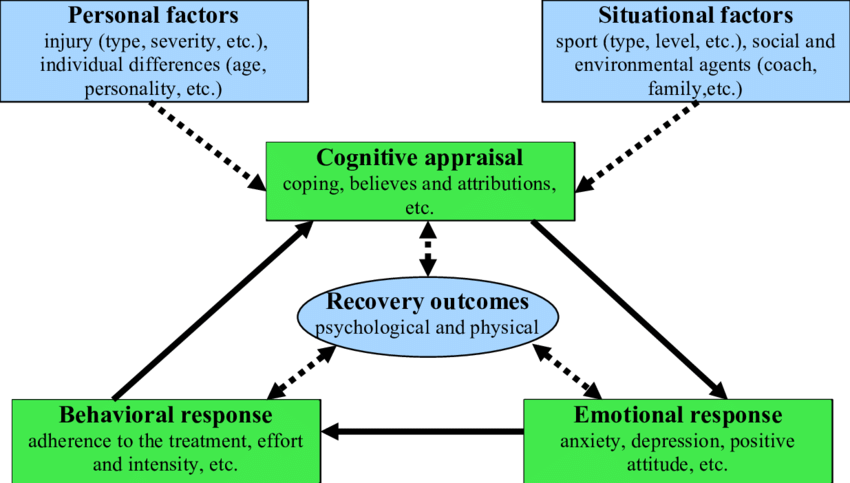
Cognitive appraisals of the injury and its recovery process were influenced by the initial athlete's perceived severity and likelihood of returning to the sport. At this stage, athletes were more likely to seek support from their significant others than from friends and family, which may help explain the differences in their cognitive appraisals. However, they tended to be more positive in their evaluations of the sport after receiving a diagnosis. As a result, these athletes sought out social support in the form of ATs.
However, the response rate was lower than expected; literature suggests a response rate of 40 to 60%. While the low response rate may be due to the mixed-methods research design, it may be a reflection of the attitudes of the AT sample as a whole. This study's findings are consistent with the premise of the Wiese-Bjornstal et al6 model that posits that psychological support is important for recovery.
After the injury, the athlete is often subjected to five stages of grieving. These stages include denial, anger, bargaining, depression, and acceptance. These stages do not necessarily occur in the same order, however; athletes may go back and forth between these stages. Individuals may experience identity loss, anxiety, and fear following an injury, and their feelings and reactions to the sport are also influenced by their perceptions of the sport.
Many people's lives revolve around sports. A sports injury can result in a sense of isolation from these activities and can debilitate motivation. By having to stop playing, people may lose a source of self-esteem, inspiration, meaning, and camaraderie. While being unable to play sports can be painful, it is important to stay active and find something new to do. With a new interest, a person's mind can be distracted from the sports injury and can resume normal life.